
PayPal x rocket.new
AI Commerce Platform
2025 (build to launch: ~2 months)
Context
PayPal partnered with Rocket, an AI-generated ecommerce site builder for small business owners, to embed PayPal payments and product catalogs directly into AI-built storefronts. I owned the partnership relationship, the launch plan, and the PayPal-side build, specifically onboarding and the product library.
Problem
We needed to validate a new acquisition channel: could PayPal ride along inside AI-generated storefronts as small business owners spun them up, and would those owners opt into PayPal as their payment processor during setup?
What i did
I ran the partner relationship end to end with Rocket and drove a two-month build-to-launch timeline on the PayPal side, scoping and shipping onboarding and product library integration fast enough to test the hypothesis before conditions changed. The test was specifically structured around opt-in rate: how many small business owners would choose PayPal payments as part of the AI-driven site setup flow.
Outcome
The test ultimately failed. While we saw a 49% opt-in rate to use PayPal, only 1% of users published their site to a live audience. But the failure was informative: it surfaced that small business owners had low appetite for creating a net-new ecommerce store in the first place, AI-assisted or not. That finding directly shaped the platform's strategy going forward . We shifted focus from powering new store creation to serving existing sellers who already had a storefront and needed better commerce infrastructure to surface on AI platforms.
What I’d Do Differently
This was a really fast test and we got to our answer quickly, which was great. However, we did not control the audience that this was put in front of because it was direct traffic to Rocket. If I were to run this test again, I would do it with PayPal customers in a contextual flow so we knew more about them and their business and would know if it was a failure specifically because PayPal customers didn’t convert.
Context
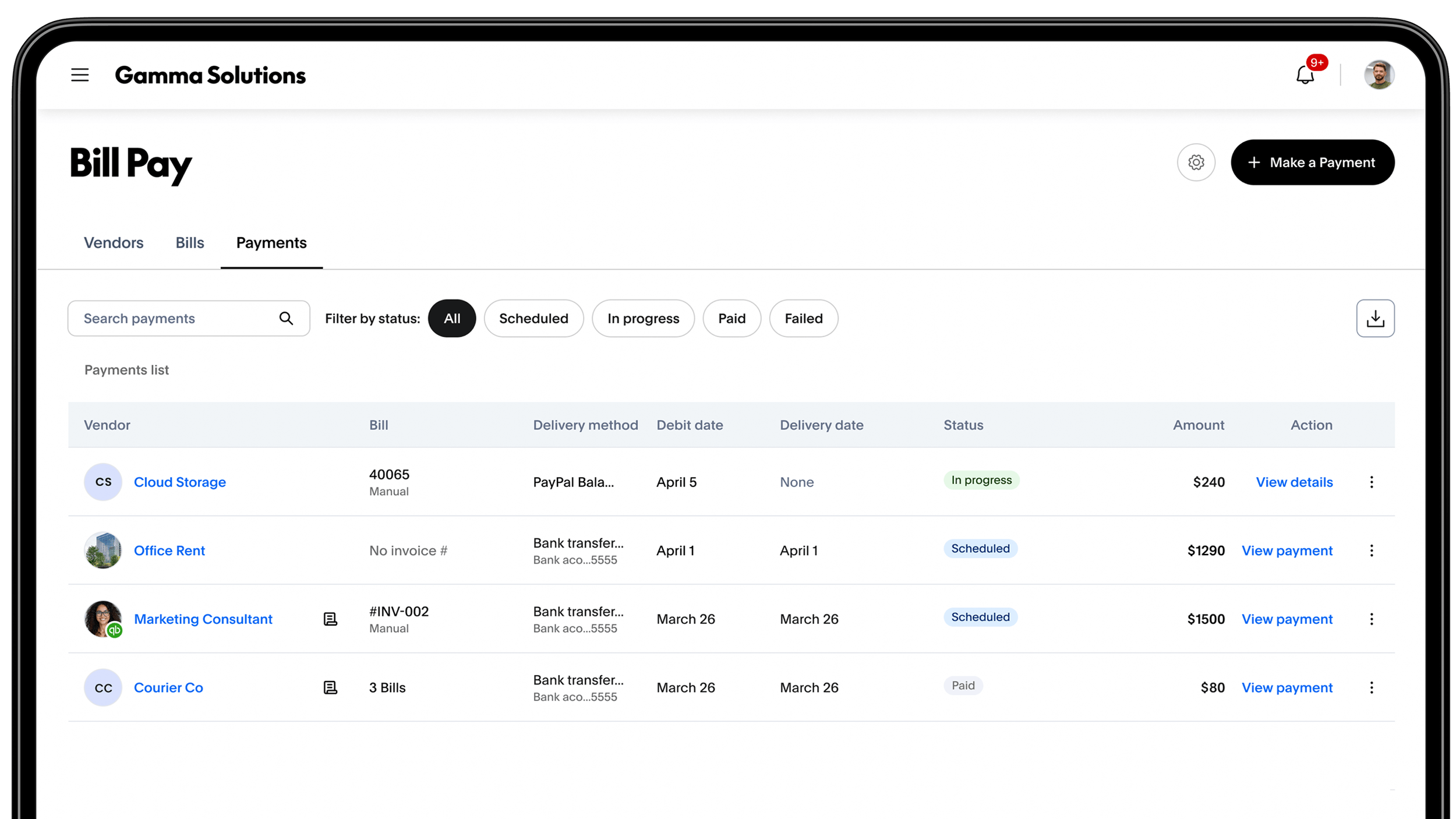
Accounts Payable was a net-new PayPal product I built to let merchants pay each other for B2B transactions directly on PayPal, using whatever payment method actually worked for them: bank transfer, check, credit card, or PYUSD. Before this, that kind of flexibility didn't exist on PayPal's platform; merchants could only pay other merchants if both sides were already using PayPal-to-PayPal payments, and everything else went through outside processors, banks, or paper checks.
Problem
If PayPal continued to only support PayPal-to-PayPal payments, we'd keep losing merchant-to-merchant transaction volume to processors, banks, and checks. The opportunity was to open payments beyond that closed loop without pushing the transaction off-platform. This would keep our merchants and their money in the PayPal ecosystem, and encourage them to do more of their business within PayPal and our tools.
What i did
I owned the end-to-end experience for a brand-new open-loop payment system, something PayPal had never built before. That meant merchants could pay each other via bank transfer, check, credit card, or PYUSD (PayPal's crypto stablecoin), all while the transaction still happened on PayPal's platform. Making credit card payments possible required registering PayPal as a BPSP (Bill Payment Service Provider) through a new partnership with Fiserv, plus separate partnerships with Visa and Mastercard to unlock card acceptance for a payment type PayPal hadn't supported before. I drove all three partnerships alongside the product build, and shipped in 9 months.
Outcome
$2M in payment volume in the first 6 months, driven entirely by product-led growth with no marketing spend.
What i’d do differently
Registering as a BPSP and working with card issuers takes a loooong time. While the UI and backend was ready, we were waiting on contractual agreements to launch credit cards payments which ultimately delayed our launch timeline. I would have started conversations earlier in order to get contracts in time for launch.
PayPal
PayPal Shipping Center
Launch, Migration, & Feature Enhancements
2024 - current
Context
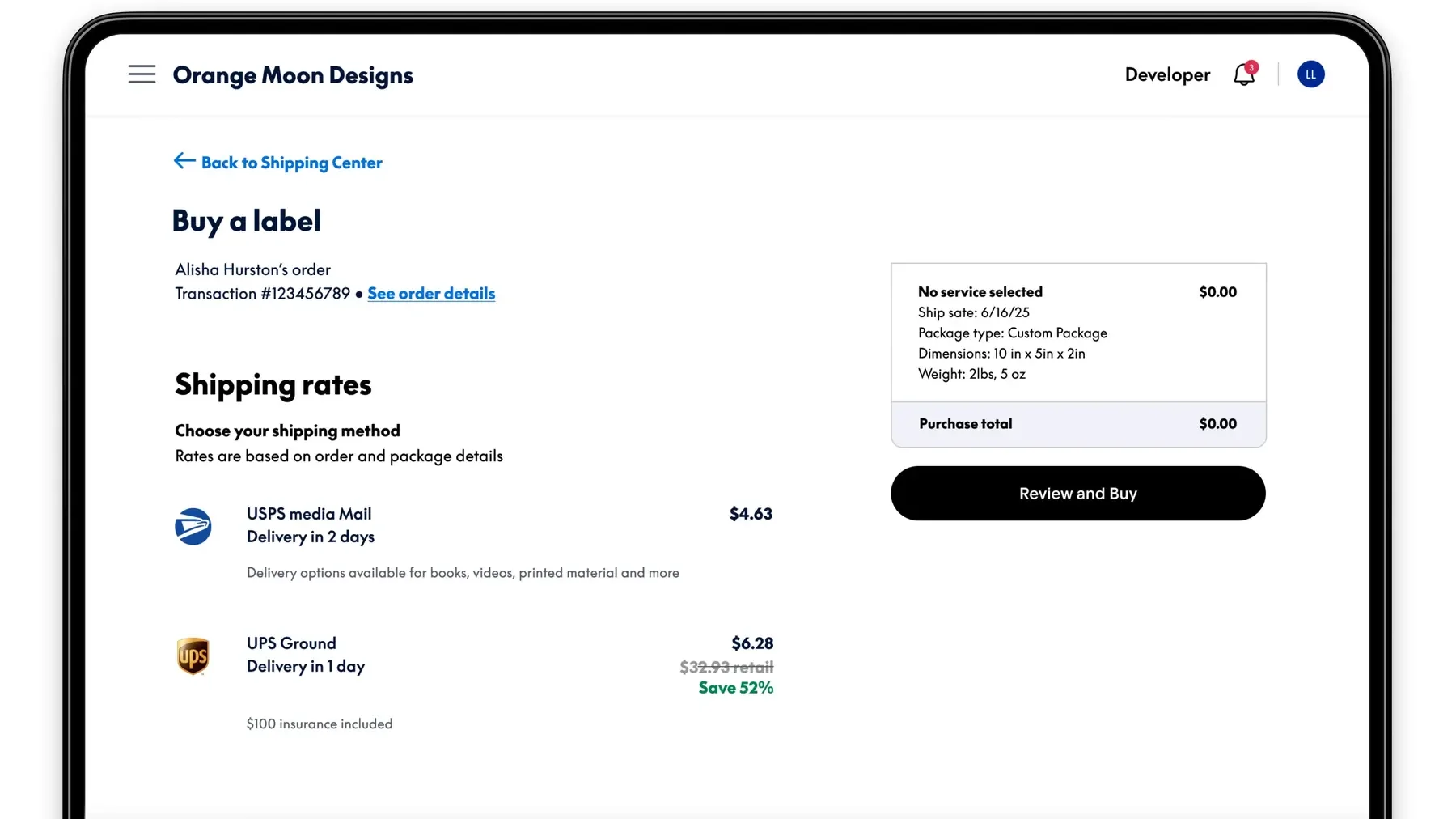
PayPal Shipping Center lets PayPal users buy discounted shipping labels. It ran for years as a grey-label product built on a third-party provider, and by 2024 it was losing PayPal $2.5M a year due to decline in monthly active users.
Problem
The grey-label version was structurally unprofitable and PayPal didn't control the product experience or the economics. The choice was to keep bleeding money on a vendor-dependent product or rebuild it in house, which meant migrating every existing user without breaking the thing they already relied on to ship product.
What i did
I picked up the rebuild of the entire product in house, replacing the third-party grey-label frontend and bringing all the UI back in-house. Once the build was at parity with the grey-label solution, I ran the migration of the full existing user base onto the new system. Since launch I've continued to own feature development and enhancements on an ongoing basis.
Outcome
The migration retained 98% of MAUs and increased profitability by 18%, turning a product that was losing $2.5M a year into a profitable one PayPal fully controls.